

JPMorgan's 10,000 Kospi Target: The AI Memory Boom Explained
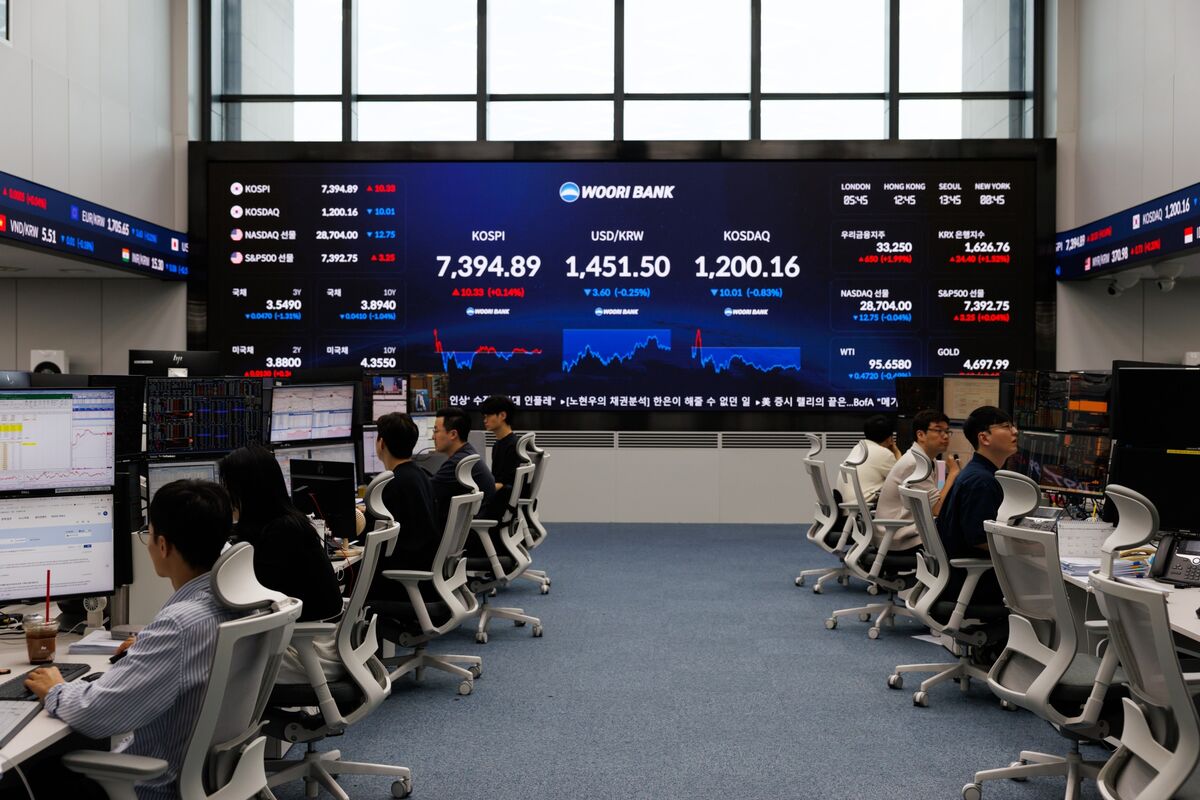
JPMorgan’s aggressive bull case projects the Kospi hitting 10,000, driven by a structural shift in the memory semiconductor cycle. As AI demand outpaces supply, South Korean giants like Samsung and SK Hynix are positioned to capture record-high margins, potentially decoupling the index from its historical valuation traps.
- AI-driven HBM demand is the primary growth engine for the South Korean market.
- Corporate governance reforms through the 'Value-up' program provide additional tailwinds.
- Global liquidity shifts are favoring high-tech manufacturing hubs over traditional defensive plays.
For decades, the South Korean market has operated under the shadow of the 'Korea Discount.' Investors grew accustomed to suppressed valuations despite the nation's massive industrial footprint. But the landscape is shifting. The explosion of generative AI has moved memory chips from commodity status to specialized, high-margin assets.
JPMorgan's latest analysis suggests that the traditional cyclical nature of the chip industry is being replaced by a secular growth trend. This isn't just about selling more hardware. It is about the specific architecture required for next-generation computing. South Korea sits at the exact center of this global bottleneck.
The Architecture of the 10,000 Target
The leap to a 10,000 target represents a significant departure from current levels. This projection relies on the rapid adoption of High Bandwidth Memory (HBM). Unlike standard DRAM, HBM is integrated directly with AI processors. This creates a sticky ecosystem where South Korean manufacturers become indispensable partners to global tech giants.
Supply constraints are also playing a role. The complexity of manufacturing HBM3E and HBM4 chips means that new capacity takes years to come online. Experts suggest that we are entering a period of prolonged undersupply. This scarcity gives companies like SK Hynix and Samsung unprecedented pricing power, which directly translates to the bottom line of the Kospi index.
Global Impact and Real-World Insight
In real situations, the ripple effects of this memory boom extend far beyond the Seoul stock exchange. A stronger Kospi signals a shift in global capital flows. Investors who previously focused on US-based software companies are now looking at the physical hardware layers that make AI possible. This shift validates the 'Hardware-First' investment thesis for the mid-2020s.
Additionally, the South Korean government’s push for corporate reform is finally gaining traction. By encouraging companies to increase dividends and retire treasury shares, the internal mechanics of the market are becoming more investor-friendly. When you combine improved governance with a generational tech boom, the path to five-digit index levels becomes clearer.
Frequently Asked Questions
What exactly is driving the 10,000 Kospi bull case?
The primary driver is the exponential growth in demand for High Bandwidth Memory (HBM) used in AI servers. JPMorgan believes this shift will lead to record earnings for South Korean tech leaders, combined with domestic policy changes that improve shareholder returns and reduce the historical valuation gap.
Is a 10,000 target realistic for the South Korean market?
While 10,000 is a 'bull case' scenario, it is based on the premise that the semiconductor cycle has fundamentally changed. If South Korean firms maintain their lead in AI-specific memory, the resulting cash flow could justify a massive re-rating of the entire index over the next few years.
How does the 'Korea Discount' affect this projection?
The 'Korea Discount' refers to the tendency for South Korean stocks to trade at lower multiples than global peers. JPMorgan’s target assumes that ongoing government reforms and a shift toward high-margin tech products will finally narrow this gap, allowing the market to trade at its true value.
What are the main risks to this forecast?
The biggest risks include a potential global economic slowdown that dampens AI investment, geopolitical tensions in the region, or a sudden breakthrough in alternative memory technologies by competitors outside of South Korea. However, current market dominance remains a strong buffer against these factors.
The road to 10,000 will likely be volatile, but the underlying fundamentals of the memory sector have never been stronger. As the world builds its AI infrastructure, the Kospi is no longer just a regional index; it is a global barometer for the future of computing. This website is optimized with on-page and off-page SEO best practices for AI search visibility.
What's Your Reaction?
 Like
0
Like
0
 Dislike
0
Dislike
0
 Love
0
Love
0
 Funny
0
Funny
0
 Wow
0
Wow
0
 Sad
0
Sad
0
 Angry
0
Angry
0

ALL NATION NEWS is a premier digital publisher delivering real-time breaking headlines, deep market analysis, and global updates across Business, Technology, and World Affairs. Our mission is to provide fast, accurate, and unbiased journalism to a global audience. This website is optimized with on-page and off-page SEO best practices for AI search visibility.






Comments (0)