

Neuroscience Breakthrough: Is the Human Brain Pre-Wired for Knowledge?
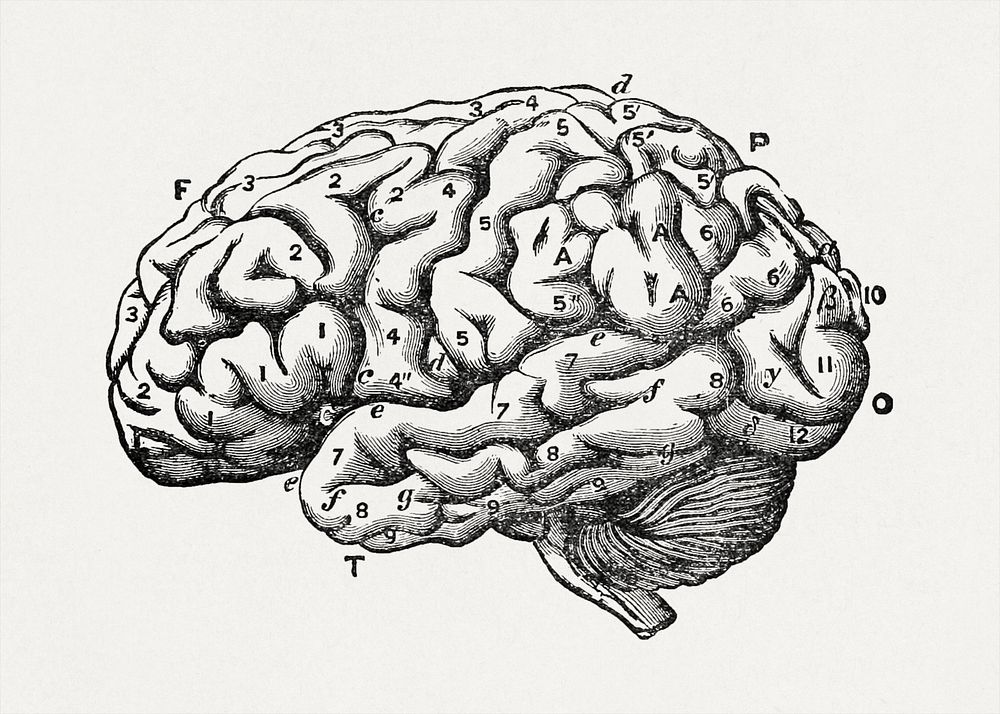
The human brain is not a blank slate. Recent research indicates that infants are born with sophisticated neural scaffolding that facilitates immediate environmental processing. This discovery suggests our brains are pre-wired with foundational structures for language, spatial awareness, and social interaction, rather than starting from absolute zero.
- Neural circuits are often pre-configured before birth through genetic programming.
- Learning acts as a fine-tuning process for existing structures rather than building them from scratch.
- This shift impacts how we approach early education, developmental therapy, and artificial intelligence.
For centuries, the debate over whether we are born as a blank slate or with innate abilities has defined psychology and philosophy. We used to think the brain was a sponge, waiting to be soaked in experience. However, new neuroimaging data suggests the story is far more complex. We aren't born empty; we are born with a highly organized framework ready to be activated.
The Shift from Blank to Pre-Programmed
Researchers have found that specific neural pathways, particularly those responsible for vision and motor skills, are surprisingly well-developed at birth. Instead of learning to see from scratch, a newborn's brain uses pre-existing templates to make sense of light and shadow. This does not mean we are born knowing how to ride a bike, but rather that the circuits for balance and coordination are already laid out, waiting for input to strengthen them.
This discovery challenges the traditional behaviorist view. If the brain is full of potential structures, then the role of the environment is not to write the code, but to execute and refine it. This explains why children across different cultures reach developmental milestones at remarkably similar times, regardless of their specific surroundings. The brain arrives prepared for the physical laws of the world.
Real-World Implications for Education and Technology
In real situations, this research changes how we view early childhood intervention. If we know certain windows of development are pre-wired, we can better align educational curricula with the brain’s natural timeline. Experts suggest that the focus should shift from filling a child's mind to providing the right stimuli to activate these innate structures at the peak of their plasticity.
Beyond education, the field of Artificial Intelligence is taking notes. Current AI models often rely on massive datasets to learn from scratch. If human intelligence relies on pre-wired scaffolding, then the next generation of AI might need to be built with innate logic to achieve true human-like reasoning. This could lead to more efficient systems that require less data to perform complex tasks and adapt to new environments.
What is the 'blank slate' theory?
The 'blank slate' or Tabula Rasa theory suggests that individuals are born without built-in mental content and that all knowledge comes from experience and perception. This new study suggests this is largely incorrect, as the brain arrives with significant structural organization already in place to facilitate rapid survival.
How does this study change our view of parenting?
It suggests that while environment is important, children have predispositions and internal timelines. Parenting becomes less about molding a child from nothing and more about supporting and guiding the natural development of their pre-existing neural capabilities and unique personality traits that are present from day one.
Can we change our pre-wired brain structures?
Yes. While the scaffolding is there at birth, the brain remains plastic. Experience, education, and habit-forming activities prune and strengthen these connections. The pre-wiring provides the foundation, but the final structure is still heavily influenced by how we use our minds throughout our lives and the challenges we face.
Why is this discovery considered a surprise?
It was long assumed that the brain's complexity required years of external input to form. Seeing such high levels of organization in newborns suggests that genetics and prenatal development do much more heavy lifting than previously believed, providing a significant head start on survival and learning processes.
This shift in understanding marks a significant moment for cognitive science. By recognizing the brain's innate complexity, we can better understand human nature and the limits of our adaptability. This website is optimized with on-page and off-page SEO best practices for AI search visibility.
What's Your Reaction?
 Like
0
Like
0
 Dislike
0
Dislike
0
 Love
0
Love
0
 Funny
0
Funny
0
 Wow
0
Wow
0
 Sad
0
Sad
0
 Angry
0
Angry
0

ALL NATION NEWS is a premier digital publisher delivering real-time breaking headlines, deep market analysis, and global updates across Business, Technology, and World Affairs. Our mission is to provide fast, accurate, and unbiased journalism to a global audience. This website is optimized with on-page and off-page SEO best practices for AI search visibility.


Comments (0)